
Finding Our Groove
As June continued, the three of us got into the groove of our Sunday talks. It helped so much to know that Liliya understood my words, and I understood hers. She was intrigued by my quiet life after the divorce and my choice not to date anyone. When I told her about that woman from church, she laughed, saying that she knew a few women who were like that.
It became clear to me that life in Russia was different from the US. A large portion of the 510,000 people in Chelny lived in apartments, not houses. Oh, there are still apartments in the US, but people rent them from the building owner or a private person. In Russia, you actually buy an apartment depending on the size of your family and the area you want to live in.
I worked for a property management company in the next town, Alamosa, Colorado, and did what they call a ‘Make Ready’ when tenants move out. I did the painting, repairs, shampoo the carpets to get ready for the next renter.
Owning vs. Renting
From what I understood from Liliya and Irina, a person or family goes through a local bank and gets a mortgage to buy an apartment in Russia. It is not uncommon for a family to pay on the mortgage for several years, and then sell it after doing some remodeling.
Life after the Fall of the Soviet Union.
Irina and Liliya talked for a good 10 minutes before they included me. “Liliya wants me to let you know what kind of life she has had since the Soviet Union fell. The country was in chaos. There was no money, and people were doing whatever to survive.
She talked about the hard time many families had finding enough food. There were very few jobs, so the men spent much of the day walking around the city looking for work or free food. It was a very hard time. This was in the 90’s and different parts of Russia experienced chaos on different levels.
After the fall, cities like Moscow and the Republic of Tatarstan were under attack from bandits who started kicking in the wooden doors of apartments, taking money, jewelry, food, and medicine.
If the man of the house tried to stop them, he was beaten or killed. It was not so bad in her country of Uzbekistan, but there were still robbers. Good people were desperate to feed their families. Thank God the government got things back under control, but not without huge losses.
Because of all of the looting, a process was started to replace the wooden doors with heavy metal doors and strong locks that have 6 or more ½” diameter pins that secure the door, but it took years to do all the doors in the country. These are pictures of our entry door in Chelny, present day.
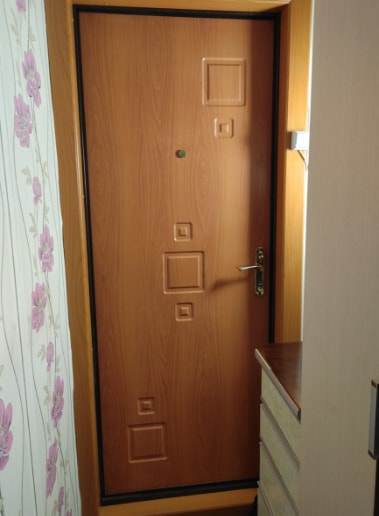
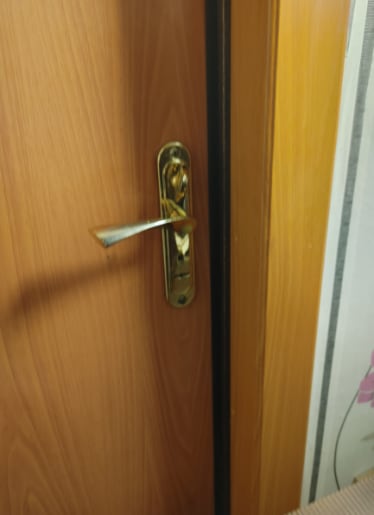
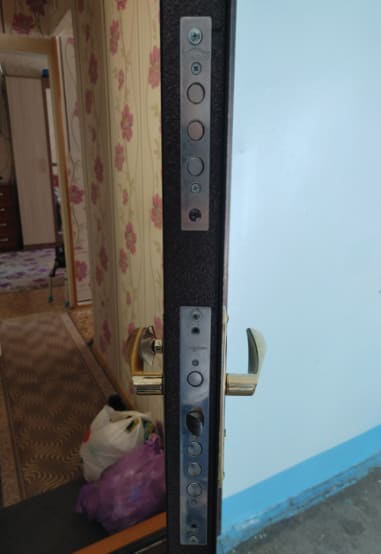
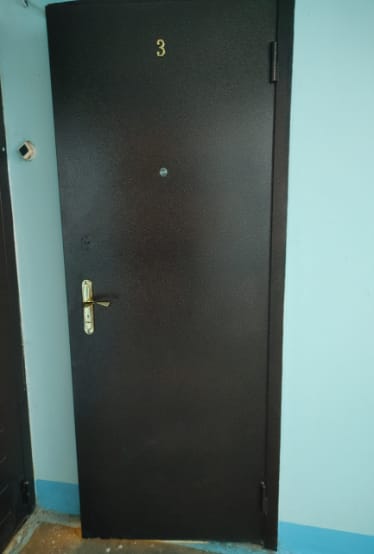
Often, the new owner of an apartment was required to buy and install the metal door just after they moved in to be up to code. That terrible time is long past, but the memories of that time still haunt the people.
I was silent for a few minutes as I tried to absorb what she had told me and tried to imagine what it must have been like. “I am so sorry this happened. I had no idea this had taken place. Most people my age want to forget the propaganda we were fed about Russia, and too many have bad thoughts about Russia. Thank you for letting me know.”
Liliya’s Journey
I then found out that Liliya was born and raised in Uzbekistan until she left home when she was 17. Through a friend of a friend, she ended up getting a job at Baikonur, where the Russian Space Program was. She was hired and trained to be a security officer.
It was a good job, but they used a lot of strong, dangerous chemicals there, and she decided to move on from there in her 20’s, before she got sick. She had no choice but to move back in with her parents, where she then got a job working with one of the first computers in Uzbekistan, helping with payroll.
It was hard for her to go back home, she told me. Her plan was to become a success and be independent, but life has a way of changing things. She was home, safe, and learning again. It wasn’t perfect, but she was safe and in familiar surroundings.
Hard Times in Chelny
In the first part of July 2005, I learned that she had moved from Uzbekistan again so she could go to Chelny. There were many family members there, cousins, and aunts. She found work in a cafeteria for a while. Then one of her friends talked her into taking a job at a car factory. There she would have a dorm room to call home and be working with one of her cousins, Margo.
Everything looked good and promising, but there were some unforeseen issues at work. The company had not planned on a slowdown in the economy, so they didn’t borrow enough money to get them by. They ran out of money early in the year, but asked the workers to stay on, and when things picked up, they would be paid in full.
Sadly, they couldn’t make payroll for 6 months. Liliya had only been on the job for a few months and didn’t make enough to put much away. She and her cousin Margo were on the verge of starving when there was a knock on the door.
Turned out that her cousin Margo managed to get a message to Liliya’s parents in Uzbekistan and tell them how bad off they were. Her dad showed up with food and support after traveling for a few days. The two cousins had lost 20 pounds each and could barely get out of bed for work. He saved them. Thank you, Dad. His name was Targot.
At the end of May, the workers were negotiating with the company to fix this, or they would all quit. Finally, things settled down, and the pay was steady again. They all got paid in full.
My Turn
It was my turn to talk about being born in the small town of Del Norte, Co., and being raised in Monte Vista, 9 miles away. The map came in handy then, at least for a reference.
I briefly touched on the divorce and having my own business at the time, but it was hard for her to grasp how I was happy living with so few people in town, and that my home was six miles away from town. Next was telling her about my trailer. When she got quiet, I was sure to ask her if she thought she lived there with me. There was silence for a few minutes more. Finally, she said . . . maybe.